 ID
ID
 EN
EN

Post-Operative Ligament Physiotherapy
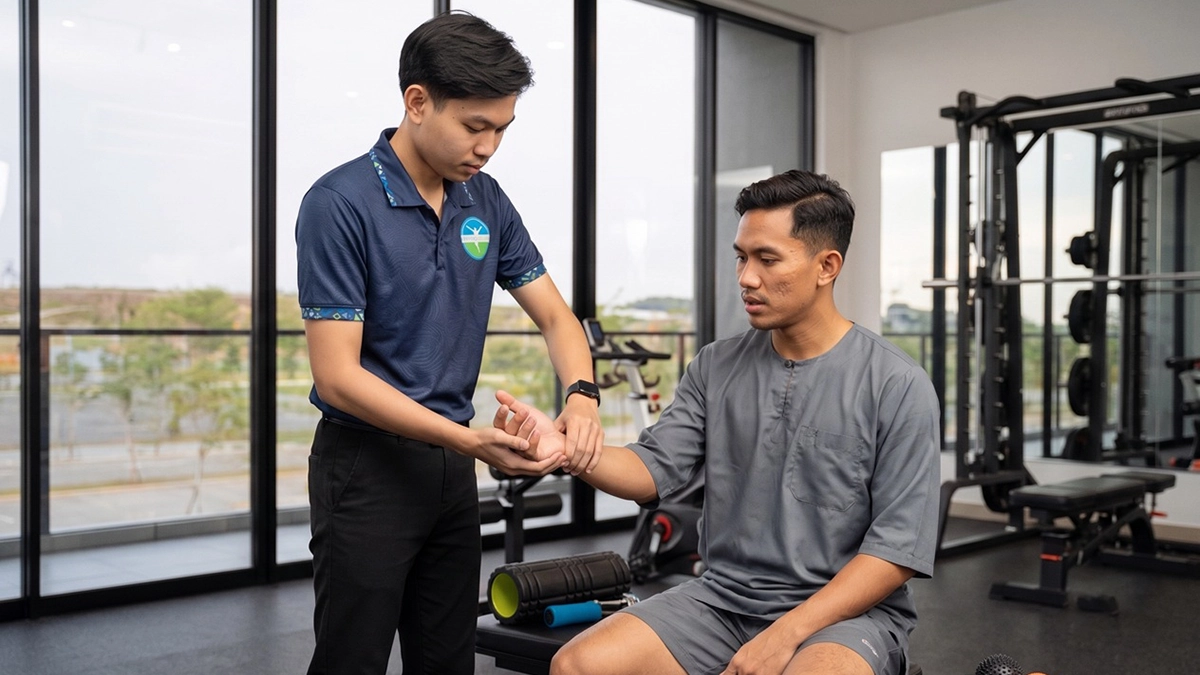
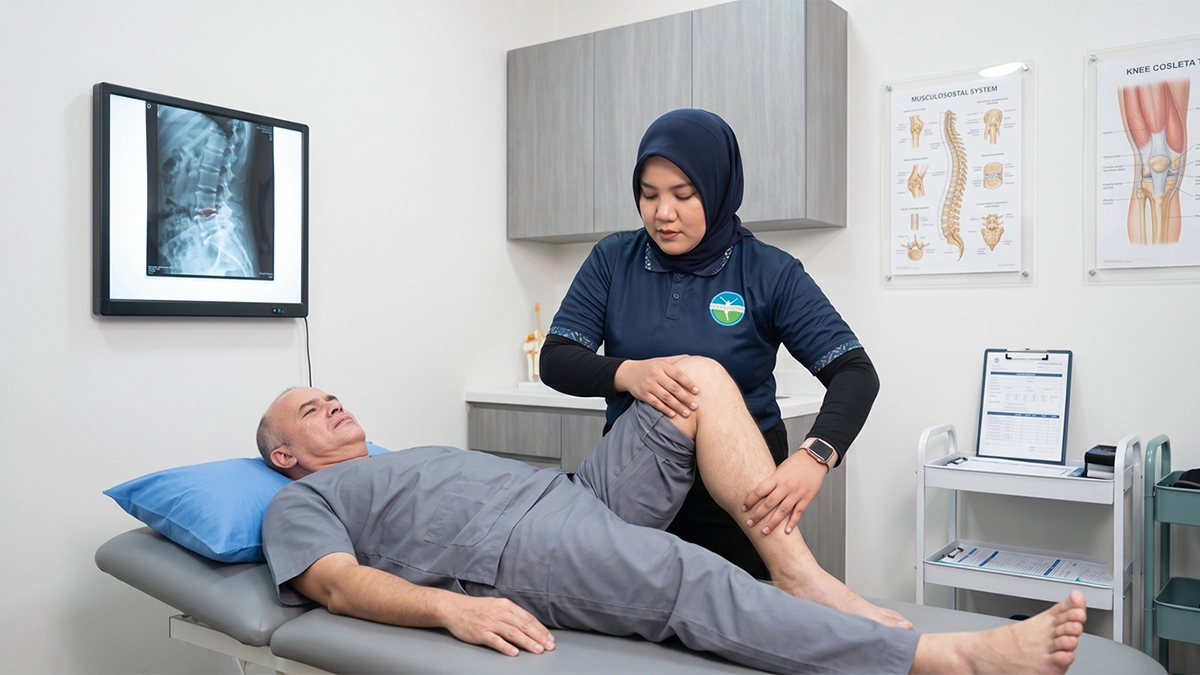
Ligament reconstruction surgery, particularly for the Anterior Cruciate Ligament (ACL), marks the beginning—not the end—of the recovery journey. While the surgical procedure restores structural stability to the knee, the ultimate outcome depends largely on a well-structured rehabilitation program. The most significant factor distinguishing successful recovery from poor outcomes is the patient's commitment to a comprehensive physiotherapy program.
In other words, surgery addresses only part of the problem. The remaining recovery depends on consistent rehabilitation under the guidance of a qualified physiotherapist over the next 6 to 12 months.
Why Physiotherapy Is Essential
A newly reconstructed ligament typically uses a hamstring tendon or patellar tendon graft, both of which require time to biologically integrate with the surrounding bone. During this healing process, the muscles surrounding the knee—particularly the quadriceps—can rapidly lose strength and muscle mass due to surgery and prolonged immobilization.
Without following an evidence-based rehabilitation protocol, patients are at increased risk of several complications, including:
Arthrofibrosis
Excessive scar tissue formation that can lead to permanent knee stiffness and restricted joint mobility.
Graft Re-rupture
Occurs in approximately 3–5 out of every 100 patients who return to high-impact activities before the graft has adequately healed.
Muscle Imbalance
Weakness of the quadriceps reduces knee stability during movements such as pivoting, cutting, or jumping.
Abnormal Gait Pattern
Walking abnormalities may become permanent if they are not identified and corrected early during rehabilitation.
Phase 1: Weeks 1–2 After Surgery (Swelling and Pain Management)
The primary objective during this stage is not strength training, but rather controlling inflammation, minimizing pain, and protecting the surgical repair.
Common physiotherapy interventions include:
RICE Protocol (Rest, Ice, Compression, Elevation): Apply an ice pack for 15–20 minutes every 2–3 hours during the first postoperative day.
Ankle Pumps: Move your ankles up and down 10–15 repetitions every hour to promote circulation and reduce the risk of blood clots.
Quadriceps Sets: Tighten the front thigh muscles without moving the knee. Hold the contraction for 5 seconds, then repeat 10 repetitions for 3 sets per day.
Straight Leg Raises: If approved by your surgeon, lift your straight leg approximately 15–20 cm (6–8 inches) off the bed while keeping the knee fully extended.
Goals by the End of Week Two
Achieve full knee extension.
Restore at least 90 degrees of knee flexion.
Phase 2: Weeks 3–6 (Restoring Range of Motion)
Once swelling is under control, rehabilitation shifts toward restoring flexibility, joint mobility, and gradual weight-bearing activities.
Recommended exercises include:
Heel Slides: Slowly bend the knee while sliding the heel along the floor, aiming for 120 degrees of knee flexion by Week 6.
Stationary Cycling (No Resistance): Begin with 10-minute sessions to improve dynamic range of motion (ROM).
Mini Squats (0–45°): Perform with support from a wall or handrail to safely strengthen the lower extremities.
Basic Proprioception Training: Stand on one leg for 30 seconds on a stable surface to improve balance and joint awareness.
During this phase, physiotherapists often begin measuring quadriceps strength using a handheld dynamometer to objectively compare the operated leg with the healthy leg and monitor rehabilitation progress.
Phase 3: Months 2–4 (Strengthening and Functional Stability)
This is the stage where rehabilitation begins to resemble a structured strength-training program rather than simple recovery exercises.
Core components typically include:
Progressive Leg Press and Leg Extension Exercises using carefully controlled resistance.
Single-Leg Balance Training on a BOSU Ball to improve joint stability and neuromuscular control.
Lateral Step-Ups to strengthen the gluteus medius, an essential muscle for maintaining knee stability during rotational movements.
Straight-Line Treadmill Jogging, usually introduced once quadriceps strength reaches at least 70% of the uninvolved leg.
Patients seeking more precise rehabilitation often choose physiotherapy centers equipped with standardized muscle strength assessment tools, allowing objective monitoring rather than relying solely on visual assessment.
Phase 4: Months 5–9 (Sport-Specific Rehabilitation)
This phase is designed for patients preparing to return to sports involving running, jumping, cutting, or rapid directional changes, such as basketball, football (soccer), and badminton.
Typical training components include:
Plyometric Drills: Including box jumps and lateral hops, with an emphasis on safe landing mechanics.
Cutting and Pivoting Drills: Simulating the quick directional changes commonly required in field and court sports.
Sport-Specific Training: Such as dribbling drills for basketball players or agility lunges for badminton athletes.
Return-to-Sport Testing: Objective performance assessments, including the Single-Leg Hop Test, with a recommended benchmark of at least 90% limb symmetry before clearance for unrestricted sports participation.
Many patients are tempted to return to sports around the fourth postoperative month because they feel significantly better. However, although symptoms may improve, the graft has not yet reached full biological maturity, which generally occurs around nine months after surgery. Returning to high-level activities too early remains one of the leading—and most preventable—causes of graft re-injury.
Here is the professionally translated continuation of your article, written in natural, native-level English suitable for an international physiotherapy clinic website.
Signs You're Ready to Return to Normal Activities
Do not rely solely on how your knee feels to determine whether you are ready to resume normal activities. Instead, use the following objective criteria before returning to work, exercise, or sports:
Quadriceps strength in the operated leg has reached at least 90% of the strength of the healthy leg, as measured with objective testing equipment rather than visual estimation.
Pass the Single-Leg Hop Test with a minimum 90% limb symmetry between both legs.
No swelling or pain after daily activities for two consecutive weeks.
Full knee range of motion, comparable to the uninjured leg.
Different Rehabilitation Approaches for ACL, PCL, and MCL Injuries
Although the overall principles of ligament rehabilitation are similar, each ligament requires a different rehabilitation strategy.
ACL (Anterior Cruciate Ligament)
ACL reconstruction is the most commonly performed ligament surgery because the ACL has a limited blood supply and poor healing capacity. Rehabilitation primarily focuses on restoring rotational stability, improving neuromuscular control, and safely managing deceleration movements.
PCL (Posterior Cruciate Ligament)
PCL rehabilitation generally follows a more conservative approach during the early stages. Because deep knee flexion places greater stress on the healing ligament, knee bending beyond 90 degrees is usually delayed to reduce the risk of overstretching the graft.
MCL (Medial Collateral Ligament)
Mild to moderate MCL injuries often heal without surgery. However, physiotherapy remains essential to restore medial knee stability, muscle strength, and normal movement patterns.
Multiple Ligament Injuries
Patients with injuries involving multiple knee ligaments typically require a longer rehabilitation timeline—sometimes up to 12 months—since several stabilizing structures must heal simultaneously.
Understanding which ligament has been reconstructed is essential. Every injury has a unique recovery timeline, and patients should avoid comparing their progress with others whose injuries and surgical procedures may be entirely different.
The Role of Nutrition and Sleep in Tissue Healing
Physiotherapy produces the best outcomes when combined with optimal nutrition and sufficient recovery. Exercise alone is not enough—the body also needs the right environment to repair damaged tissues.
Recommendations include:
Sleep 7–9 hours per night to promote the release of growth hormone, which supports muscle and connective tissue regeneration.
Consume 500–1,000 mg of Vitamin C daily to support collagen synthesis, an essential component of ligament graft healing.
Stay well hydrated by drinking at least 2 liters of water per day to maintain the elasticity and health of soft tissues surrounding the joint.
Avoid smoking and alcohol throughout recovery, as both have been shown to reduce blood flow and slow tissue healing.
Combining proper nutrition with a structured rehabilitation program often results in a faster and more effective recovery than relying on exercise alone.
Practical Tips to Speed Up Recovery at Home
To maximize your recovery, consider the following recommendations:
Sleep with a pillow placed under your heel rather than under your knee to help prevent knee flexion contracture.
Keep a daily pain diary (0–10 scale) to objectively monitor recovery instead of relying solely on how you feel.
Consume 1.2–1.6 grams of protein per kilogram of body weight each day to support muscle repair and tissue regeneration.
Avoid sitting cross-legged or maintaining deep knee flexion during the first three months after surgery.
Equipment Commonly Used in Modern Physiotherapy Clinics
The quality of rehabilitation depends not only on how patients feel but also on how objectively their progress is measured.
Handheld Dynamometer
Measures muscle strength quantitatively, allowing therapists to compare the operated leg with the healthy leg.
Force Plate
Evaluates weight distribution, balance, and landing mechanics during standing and jumping activities.
Digital Goniometer
Measures joint range of motion with greater precision than traditional manual assessment methods.
Underwater Treadmill (Available in Selected Clinics)
Allows patients to walk or jog with reduced body weight through water buoyancy, making it especially beneficial during the early stages of rehabilitation.
Patients whose rehabilitation is guided by objective measurements often feel more confident returning to sports because their readiness is supported by measurable data rather than subjective improvement alone.
When Should You Consult a Physiotherapy Clinic?
Contact your physiotherapist or orthopedic surgeon immediately if you experience any of the following warning signs, as they may indicate complications:
Sudden worsening of knee swelling after it had previously improved.
A fever above 38°C (100.4°F) accompanied by redness around the surgical incision.
A sensation that the knee is catching, locking, or giving way while walking.
Sharp pain that does not improve with medication or adequate rest.
Ligament rehabilitation is not a race. It is a gradual, evidence-based process that requires objective assessment at every stage—from controlling swelling during the first week to passing functional performance tests before returning to sports.
If you have recently undergone ligament reconstruction surgery or are looking for a physiotherapy clinic in Jakarta that offers a structured and evidence-based rehabilitation program, ensure that every phase of your recovery is completed under professional supervision. The goal is not simply to feel better, but to ensure your knee is truly prepared for daily activities and athletic performance.
Frequently Asked Questions (FAQs)
1. How long does post-operative ligament rehabilitation typically take?
Recovery usually takes 6–9 months for patients planning to return to competitive sports, while most individuals can resume normal daily activities within 3–4 months, provided they do not participate in high-impact sports.
2. Can I perform rehabilitation exercises at home without a physiotherapist?
Yes. Basic home exercises can be performed independently. However, joint range of motion, muscle strength, and rehabilitation progress should still be assessed regularly by a physiotherapist to minimize the risk of complications such as arthrofibrosis.
3. Is physiotherapy painful?
Some discomfort is normal, particularly during exercises designed to improve knee range of motion. Your physiotherapist will adjust the intensity of treatment to ensure it remains within a safe and tolerable level.
4. How many physiotherapy sessions are recommended each week?
During the early rehabilitation phase (Weeks 1–6), 2–3 supervised sessions per week are generally recommended. As patients become more independent, treatment frequency can often be reduced to 1–2 sessions per week.
5. Can physiotherapy restore my knee to 100% of its pre-injury condition?
With full adherence to a structured rehabilitation program and regular professional evaluation, most patients achieve 90–100% of their pre-injury strength and knee stability. However, recovery timelines and outcomes vary depending on individual factors.
6. Will I still need a knee brace after completing physiotherapy?
In some cases, yes. Patients returning to contact sports or high-risk activities may be advised to wear a functional knee brace during the initial months after returning to sport as an additional preventive measure, even if muscle strength has been fully restored.
7. What is the difference between rehabilitation at a professional physiotherapy clinic and following exercises from YouTube videos?
Online exercise videos provide general guidance but cannot account for your specific injury, surgical procedure, or stage of recovery. Professional physiotherapists tailor rehabilitation based on objective assessments of muscle strength, joint range of motion, movement quality, and pain tolerance, ensuring that your rehabilitation progresses safely and effectively.
 Contact Us