 ID
ID
 EN
EN

Fisioterapi Nyeri Leher & Cervical Syndrome di Jakarta
Nowadays, neck pain is no longer a
condition that only affects the elderly. In Indonesia, especially among office
workers, active smartphone users, and drivers, neck problems have become
increasingly common.
One frequently overlooked condition
is Cervical Syndrome — a disorder affecting the neck characterized by
stiffness when turning the head, pain radiating to the arms, and persistent
dizziness. These symptoms may indicate that the cervical spine requires proper
medical attention as soon as possible.
What Is Cervical
Syndrome?
Cervical Syndrome refers to a group
of symptoms caused by irritation or compression of nerves in the cervical spine
(neck region). This area consists of seven vertebrae that are highly flexible
but also vulnerable to injury and degeneration.
Symptoms usually develop gradually.
In the early stages, patients may only feel mild stiffness or discomfort in the
neck. However, if left untreated, the condition can worsen and potentially
affect productivity and the nervous system.
Common Symptoms of Neck
Pain & Cervical Syndrome
1. Cervicogenic
Headache
A type of headache that originates
from the neck and radiates toward the head. It is often caused by excessive
tension in the upper neck muscles or joint dysfunction in the cervical spine.
2. Radiculopathy
(Radiating Pain)
Pain, tingling, or numbness that
spreads from the neck to the shoulders, arms, and even fingers.
3. Muscle Weakness
Patients may experience reduced
grip strength, difficulty holding objects, or fatigue during light activities.
4. Balance Disturbances
or Vertigo
In some cases, cervical spine
disorders may affect blood flow to the brain or the body’s balance system.
5. Local Neck Pain
Stiffness, soreness, or sharp pain
in the neck, especially when turning the head or looking down for prolonged
periods.
Main Causes of Neck
Pain & Cervical Syndrome
Modern lifestyle habits play a
significant role in the development of neck problems. Based on clinical
findings in physiotherapy clinics in Jakarta, common causes include:
Poor Working Posture
Sitting for long hours in front of
a computer with improper monitor height forces neck muscles to work
continuously under strain.
Cervical Spondylosis
Age-related degeneration of the
cervical spine may lead to bone spur formation (osteophytes). Risk factors
include:
- Smoking
- Aging
- Family history of cervical syndrome
- Repetitive neck movements
- Previous neck injuries
Text Neck Syndrome
Caused by prolonged forward head
posture while looking at smartphones, increasing mechanical load on the neck.
Cervical Herniated
Nucleus Pulposus (HNP)
A disc protrusion that compresses
nearby nerves.
Whiplash Injury
Neck injury caused by sudden
acceleration-deceleration forces, such as during abrupt vehicle braking.
Diagnosis of Neck Pain
& Cervical Syndrome
Diagnosis begins with:
1. Medical History
(Anamnesis)
Discussion of pain location,
intensity, and associated symptoms such as numbness or tingling.
2. Physical Examination
- Range of Motion testing
- Neurological examination (muscle strength,
reflexes, sensation)
- Spurling Test to assess nerve compression
3. Imaging Tests
- MRI (to assess soft tissue and nerve compression)
- X-Ray (to evaluate structural abnormalities and
degeneration)
- CT Scan (in selected cases)
Treatment planning depends on
severity. Mild cases are typically managed with medication, posture correction,
and physiotherapy. More severe cases may require advanced medical treatment or
surgical consultation, followed by rehabilitation therapy.
Physiotherapy Treatment
for Neck Pain & Cervical Syndrome
At a professional physiotherapy
clinic, recovery is performed through a structured and comprehensive approach —
not only focusing on pain relief but also correcting underlying causes.
Physical Assessment
A physiotherapist performs movement
and nerve provocation tests to determine whether pain originates from muscle
tension or nerve compression.
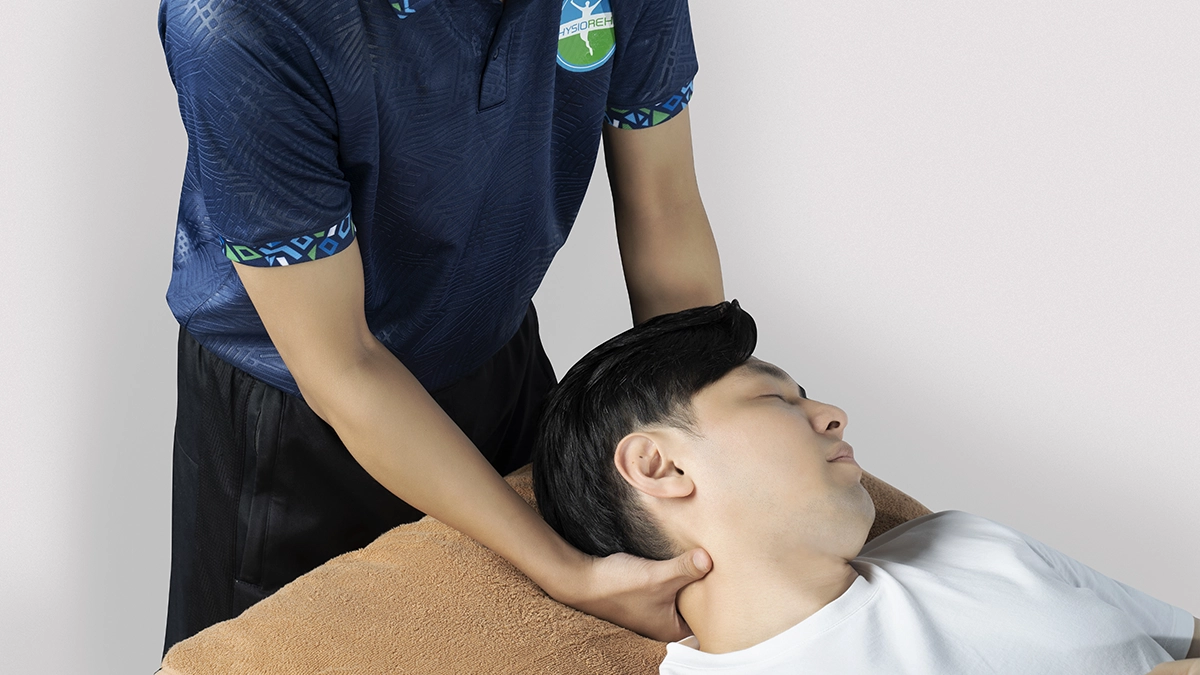
Manual Therapy
Joint mobilization and soft tissue
techniques to reduce stiffness, improve circulation, and relieve nerve
pressure.
Ultrasound Therapy or
Dry Needling
Used to treat trigger points (tight
muscle knots). Modern physiotherapy clinics such as Physiorehab utilize
therapeutic modalities to target deep muscle tension safely.
Stabilization &
Postural Exercise
Strengthening deep neck flexor
muscles is essential to prevent recurrence. Patients are guided through
specific exercises that can be performed at home or in the office.
Why Proper Diagnosis
Matters
While traditional massage may
provide temporary relief, it does not address the underlying cause. The neck is
a vital structure containing the spinal cord and major blood vessels to the
brain. Aggressive or improper manipulation may worsen nerve compression.
Proper assessment and
evidence-based physiotherapy treatment are essential for safe and effective
recovery.
Tips to Prevent Neck
Pain at Work
Adjust Monitor Position
The center of your screen should be
at eye level to prevent excessive bending.
Follow the 20-20-20
Rule
Every 20 minutes, look at an object
20 feet away for 20 seconds and perform light neck stretches.
Use Proper Pillow
Support
Choose a pillow that maintains
natural cervical alignment.
Perform Daily
Stretching
Gentle neck rotations and mobility
exercises help maintain flexibility.
Get Professional
Treatment at Physiorehab
Do not ignore persistent neck pain.
Early intervention prevents long-term nerve damage and mobility limitations.
Physiorehab provides comprehensive
physiotherapy services supported by experienced therapists and modern
rehabilitation technology to help restore optimal movement function.
Physiorehab Clinics are available
in:
Tangerang
- Karawaci
- Gading Serpong
- Alam Sutera (coming soon)
Jakarta
- Simatupang
- Gandaria
- Cideng
- Kelapa Gading
- PIK
- Meruya (coming soon)
Bekasi
Medan
Surabaya
Book your consultation today and
receive an accurate diagnosis for faster recovery.
For appointments and further
information, contact our team via WhatsApp at:
+62 819 0819 5900

 Hubungi Kami